
Functional Communication:
Helping Every Child Be Heard
Practical ways to help children express their needs, make choices, and communicate with greater independence.
Every child deserves a reliable way to communicate.
For children with autism who have difficulty expressing their needs, frustration can sometimes appear as crying, grabbing, yelling, or other behaviors. Functional communication provides children with practical alternatives for expressing what they want, need, or do not want.
What Is Functional Communication Training?
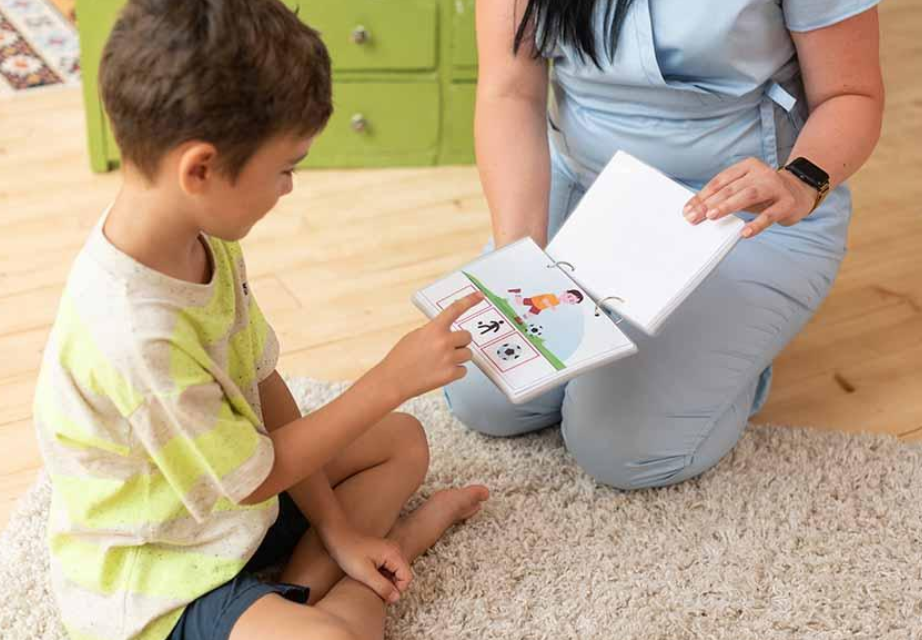
Functional Communication Training (FCT) is used by speech-language professionals to teach meaningful communication. Children may learn to request an item, ask for help, request a break, greet someone, or communicate “no.”
Communication can happen through spoken words, gestures, signs, pictures, or AAC systems depending on the child’s abilities and preferences.
Small Messages. Meaningful Independence.
Everyday communication can help a child express what matters to them.
“I want that.”
Ask for a snack or a favorite toy.
“Help, please.”
Let someone know when support is needed.
“No” or “Break.”
Refuse something or request time to pause.
These messages can be expressed through words, signs, gestures, pictures, or AAC.
Practice Where Life Happens
One important strategy is to practice communication in real-life situations. For example, a child can learn to request a snack while in the kitchen or ask for a favorite toy during play. Visual request systems and communication apps can also provide additional support.
How Parents Can Support Communication
Parents can make functional communication part of everyday routines.
- Offer simple choices.
Give your child opportunities to make a choice before frustration builds. - Acknowledge communication attempts.
When your child uses a word, sign, gesture, or picture to communicate, acknowledge the attempt and respond consistently. - Support a safe way to say “no.”
Teaching an appropriate way to say “no” is also important because children need a safe way to refuse or express discomfort.
Personalized Support at SpeechSparkle
At SpeechSparkle, we focus on practical communication skills that promote independence and reduce communication-related frustration. Our therapists work with children and families to identify meaningful communication goals.
Help Your Child Communicate More Independently
Contact SpeechSparkle for personalized autism speech therapy support.
Contact SpeechSparkle →