
Why Early Speech Therapy Is Important for Children with Autism
Early support can help children with autism build meaningful communication skills, strengthen social interaction, and participate more confidently in everyday life.
Why Early Speech Therapy Matters
Early childhood is a critical period for learning communication skills. For children with Autism Spectrum Disorder (ASD), receiving speech therapy during the preschool years can significantly support their ability to communicate, interact, and participate in everyday activities.
Early intervention takes advantage of a child's developing brain and provides opportunities to build essential language and communication skills at an important stage of development.
Early support can make everyday communication easier
Speech therapy can help children develop ways to express their needs, understand others, participate in social interactions, and communicate across different environments such as home, school, and the community.
How Autism Can Affect Communication
Children with autism may experience communication differences in several areas. Some children may have difficulty understanding language, while others may find it challenging to express themselves or use language appropriately in social situations.
Receptive Language
Difficulty understanding words, questions, instructions, or conversations.
Expressive Language
Challenges expressing thoughts, needs, feelings, or ideas using words or other communication methods.
Social Communication
Difficulty using communication effectively during social interactions and everyday situations.
Some children may also lose previously acquired words or social skills. This makes early assessment and individualized intervention particularly important.
What Happens in Speech Therapy?
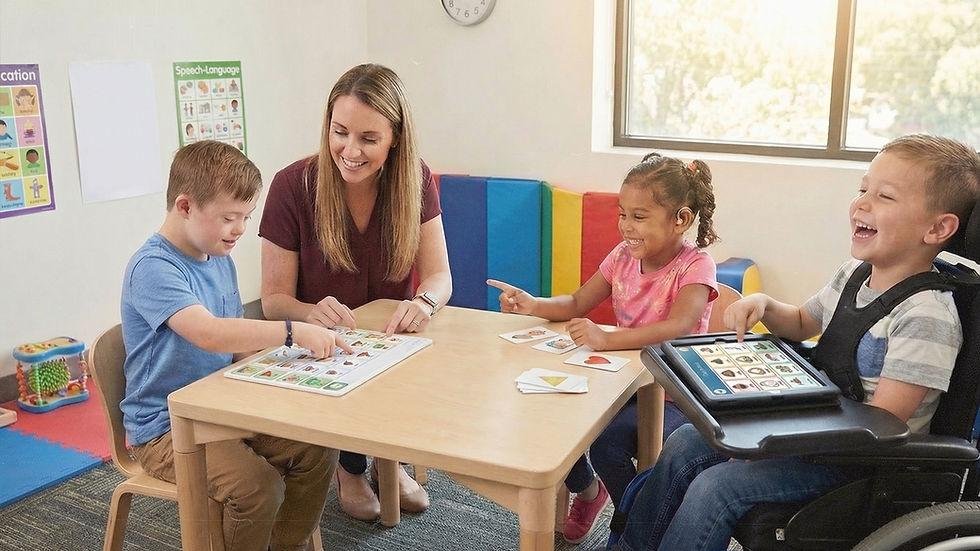
Speech-language pathologists use engaging and play-based activities to encourage communication naturally. Therapy is adapted to each child's strengths, needs, interests, and developmental stage.
Using games and play activities to create natural opportunities for communication.
Helping parents use simple strategies during everyday routines at home.
Using visual supports, gestures, sign language, or AAC systems when appropriate.
Integrating communication practice into family routines so skills can be used beyond therapy sessions.
How Parents Can Support Communication at Home
Parents play an important role in helping children practice communication skills throughout the day. Small, consistent interactions can create valuable learning opportunities.
Use Simple Language
Use short, clear sentences that match your child's current communication level.
Create Opportunities
Encourage your child to communicate when requesting help, toys, food, or favorite activities.
Celebrate Every Attempt
Recognize verbal, gestural, visual, and other meaningful communication attempts.
Personalized Early Intervention for Every Child
At SpeechSparkle, our therapists design individualized early intervention programs that encourage communication through play, family involvement, and evidence-based therapy techniques.
Our goal is to help every child develop the confidence to communicate effectively at home, school, and in the community.
Give Your Child the Advantage of Early Support
Early communication support can help children build skills that become part of everyday life. Take the first step toward personalized speech therapy support.
Schedule an AssessmentFocus Keywords: early speech therapy for autism, autism speech therapy, online speech therapy for kids, early intervention autism, speech therapist for autism