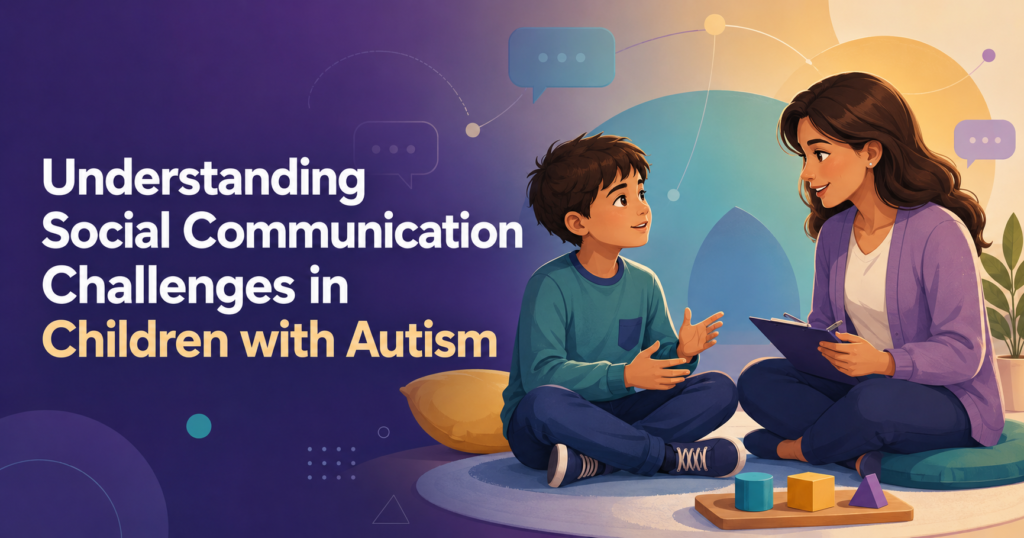
Understanding Social Communication Challenges in Children with Autism
Communication is more than speaking. It includes facial expressions, body language, tone of voice and the unwritten rules that help us connect with others.
Children with Autism Spectrum Disorder (ASD) may find the social aspects of communication challenging. Speech therapy can help children build authentic, functional communication skills while respecting their individual communication styles.
Recognising the Signs
Common Social Communication Challenges
Children with ASD may experience challenges that affect friendships, classroom participation and everyday interactions. Every child is different, but some common areas include:
Taking Turns
Knowing when to speak, listen or allow another person to join the conversation.
Adapting Language
Adjusting how they communicate depending on the listener or social situation.
Understanding Meaning
Interpreting jokes, sarcasm, figurative language or meanings that are not stated directly.
Reading Social Cues
Recognising facial expressions, body language or when someone wants to change the topic.
How Therapy Helps
Building Practical Communication Skills
Speech-language pathologists use evidence-based approaches to help children understand conversational rules, practise interactions and build confidence in social situations.
Social Communication Activities
Guided practice with greetings, topic changes, turn-taking and conversational repair.
Peer Interaction Groups
Supportive opportunities to practise communication with peers in meaningful situations.
Video Modelling
Visual examples that make social situations and communication choices easier to understand.
Support at Home
How Parents Can Reinforce These Skills
Familiar, low-pressure situations at home can offer valuable opportunities to practise communication.
Role-Play Situations
Practise greeting someone, joining a game, asking for help or handling a misunderstanding.
Explain Expectations
Describe social expectations clearly instead of assuming the child already understands them.
Follow Shared Interests
Encourage interaction with peers who share similar interests, making conversation feel more natural.
Social Communication Therapy at SpeechSparkle
At SpeechSparkle, we provide personalised social communication therapy that helps children navigate everyday interactions while celebrating their individuality. Our therapists work closely with families to build practical communication skills that improve participation at home, school and in the community.
Expert Support, Wherever You Are
Looking for social communication therapy for autism?
Book an online consultation with SpeechSparkle and take the next step towards confident, meaningful communication.
Book an Online Consultation →