
ADHD & Communication:
Helping Children Express Themselves
Understanding communication challenges and building practical skills for more confident conversations.
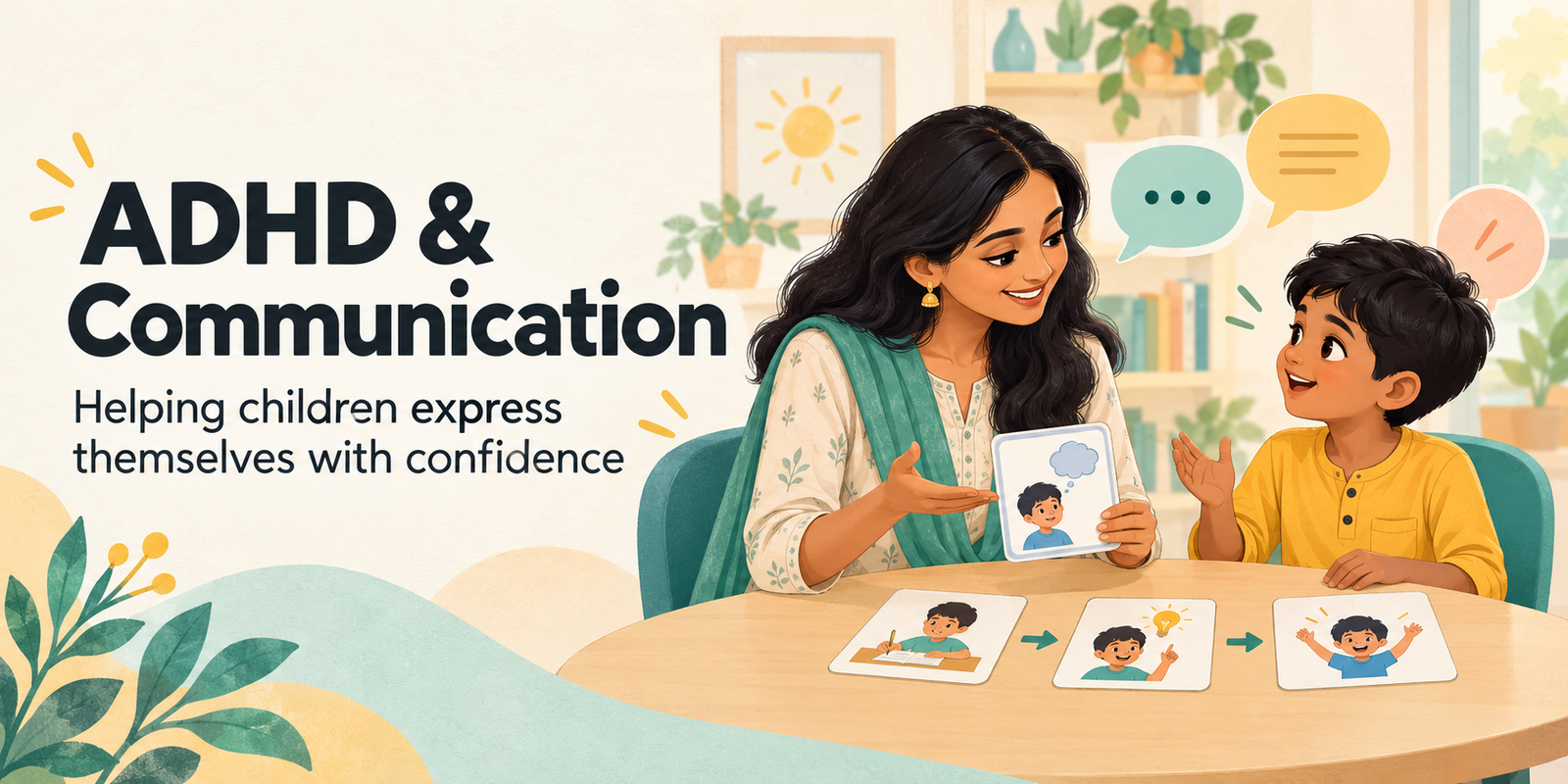
ADHD can affect more than attention
Attention-Deficit/Hyperactivity Disorder (ADHD) is often associated with attention difficulties, impulsivity, and hyperactivity. However, ADHD can also affect communication. Children may have difficulty organizing their thoughts, following conversations, remembering information, or waiting for their turn to speak.
What might this look like?
Some children with ADHD may interrupt frequently, move away from the topic during conversations, or find it difficult to explain their thoughts in an organized way. They may also struggle to follow lengthy instructions, particularly in noisy environments.
Taking turns
Waiting for a turn to speak can be challenging.
Staying on topic
Conversations may move away from the original topic.
Following instructions
Lengthy directions can be difficult to remember and follow.
How speech therapy can help
Speech-language pathologists can support children with ADHD by addressing communication and cognitive-linguistic skills. Therapy may focus on listening comprehension, narrative organization, conversational skills, self-monitoring, and executive functioning.
Practical strategies for communication
Speech therapy can use practical strategies to address these challenges. Children may learn to pause before speaking, organize information using visual tools, and break complicated instructions into smaller steps. Narrative activities can help them organize stories and explain events more clearly.
Pause before speaking
Practice taking a moment before joining a conversation.
Use visual tools
Use pictures and visual organizers to arrange information.
Break it into steps
Make complicated instructions easier to follow.
Build a story
Practice organizing stories and explaining events clearly.
Small ways parents can help at home
Parents can reinforce these skills at home. A simple hand signal can remind a child to pause and listen. Instead of giving several instructions at once, provide one or two steps at a time. Parents can also encourage active listening by asking children to repeat instructions in their own words.
- Use a simple hand signal to remind your child to pause and listen.
- Give one or two steps at a time instead of several instructions together.
- Ask your child to repeat instructions in their own words.
Personalized support at SpeechSparkle
At SpeechSparkle, our speech language pathologists provide personalized therapy designed around each child's communication needs. We help children develop practical strategies for communicating confidently at home, school, and socially.
Wondering whether your child could benefit from speech therapy for ADHD?
Schedule an online consultation with SpeechSparkle.
Schedule an Online Consultation